|
Dear ,
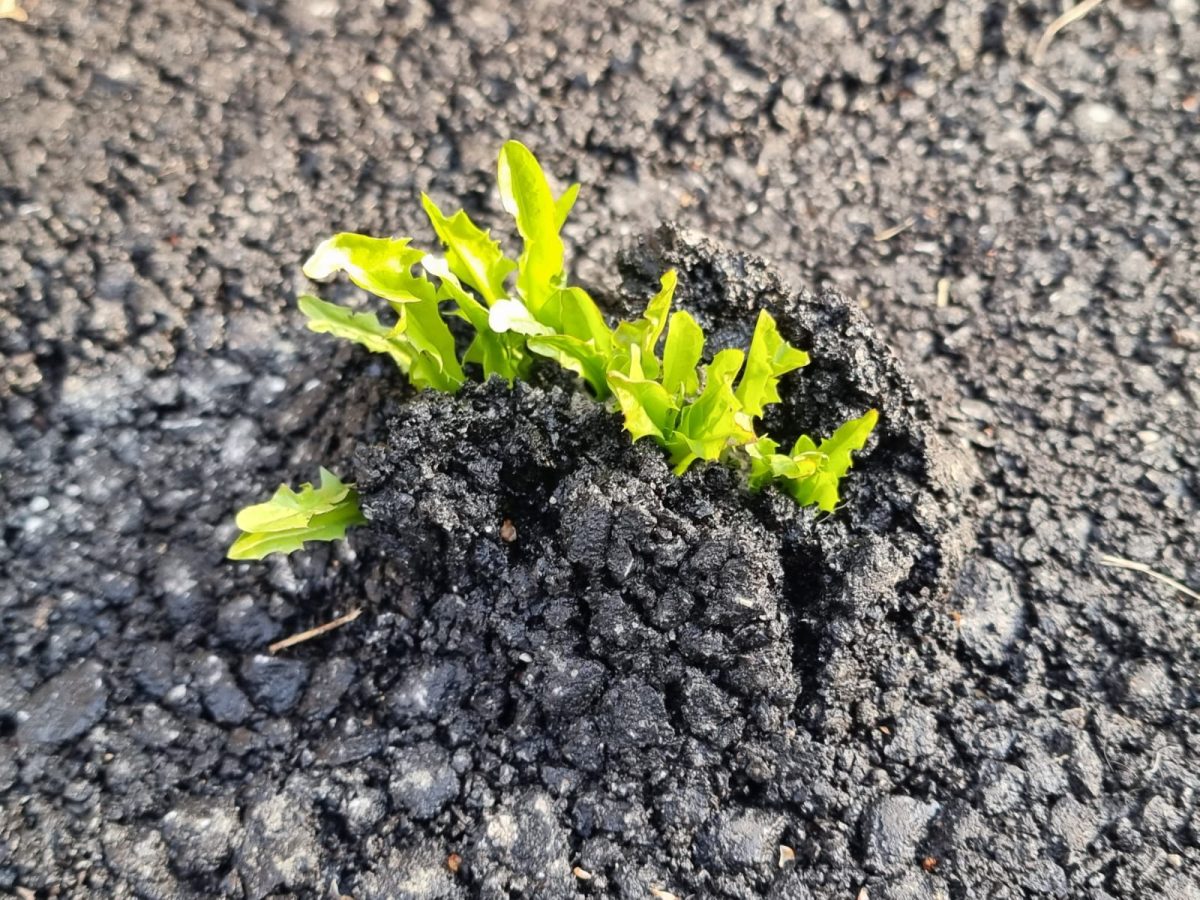
Last week I took the above photo. A small plant breaking through asphalt, through black, hard stone. I had to stop — because what fascinated me was its symbol of life. And then I remembered this quote:
"Between stimulus and response there is a space. In that space lies our freedom and our power to choose a response. In that response lies our growth and our happiness."**
This space is often minimal. It is the moment before we react to something that throws us off balance. The moment in which we can consciously choose our next step.
Frankl discovered this space under the most extreme circumstances — and realized: that was something no one could take from him. The freedom to choose his response to what happens to him.
Most of the time we are not even aware that this space exists. A setback, a difficult situation, a "hard ground" paralyzes us. Instead of looking for a way through, we freeze, we evade, or we give up.
The little plant could have stayed in the dark — no one would have missed it. But it did not give up. It found its way — despite the circumstances — upward, through the hardest possible ground.
I believe this is exactly what is meant by that "space." Not a big, dramatic moment of decision making. But that quiet, inner impulse: “I choose how I respond to what happens to me.”
The most beautiful part of the quote is the last sentence: "In that response lies our growth and our happiness."
It is not about success or productivity, not about looking good. It is about who we are becoming in that process.
Every time we use that “space”, every time we truly respond — even when it is hard, even when no one sees it — we grow a bit more. Just like that little plant.
Perhaps there is such a space for you too, one you have not yet discovered?
I wish you a wonderful month of April — with many moments of “space discovery”, growth, and happiness.
In the spirit of love and reconciliation
Ursula
**this quote is widely attributed to Viktor E. Frankl, the exact wording and phrasing are more accurately linked to Stephen R. Covey who came across it in a Hawaiian library |